
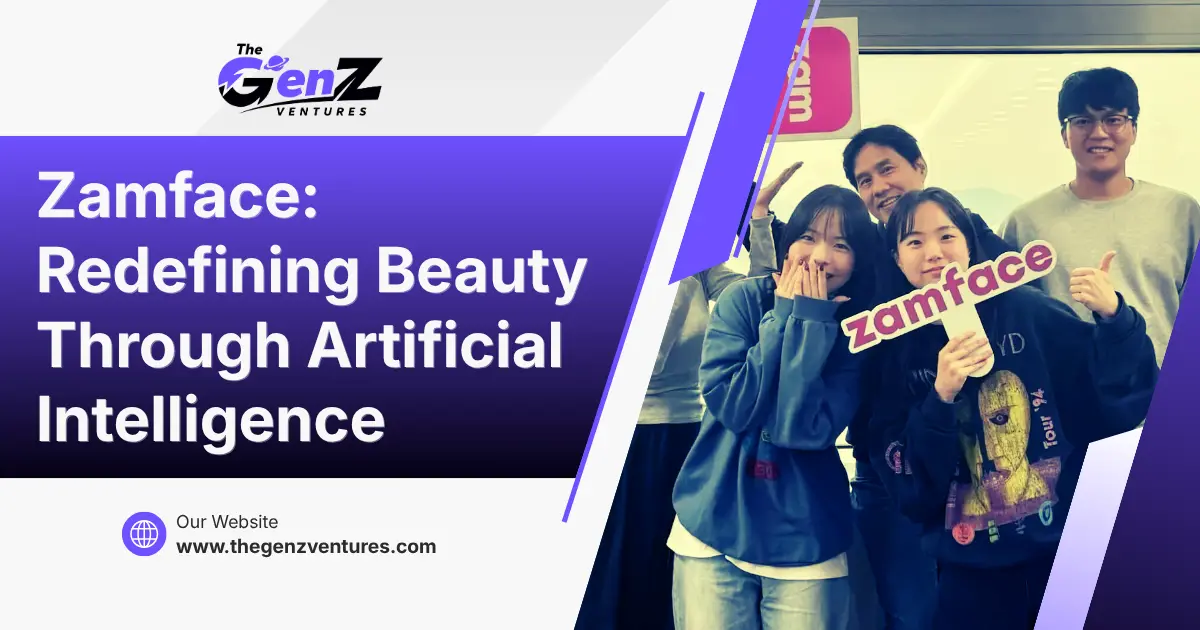
The story of Zamface is changing the way artificial intelligence is transforming the beauty industry for a new generation of consumers. Yun Jung-ha, CEO and founder of Zackdang Company, launched Zamface, an AI-powered beauty platform. This leading platform helps users to find beauty products, creators, and makeup techniques that align with their facial features and skin tones.
Founded in 2019, Zamface leverages technologies such as face recognition, deep learning, and augmented reality to provide more personalized beauty suggestions for users. It analyzes selfies and recommends personal color types, suitable beauty products, and connects users with creators who have similar facial features.
As per the reports, the platform attracted more than 1 million users in just 4 months. Therefore, this platform has gained immense popularity among Generation MZ, a term used for South Korea’s Millennials and Gen Z consumers.
Table of Contents
Can you briefly introduce yourself and tell us about your business?
I am Yun Jung-ha, the CEO and founder of the Zackdang Company, the key foundation of the Zamface. Earlier, I used to work as the Head of Kakao Hairshop, where I got firsthand experience in the beauty and technology sector. At that point in time, I realized that there is a huge gap in the beauty industry. People wanted beauty recommendations that were more personalized and aligned with their facial features rather than generic suggestions.
This was the turning point that inspired me to build Zamface. Launched in June 2019, this platform aimed to help users find their beauty products, get makeup tutorials, and know the suitable colors that matched their skin tones. Today, Zamface makes the most of AI, face recognition, deep learning, and augmented reality to analyze selfies and provide customized beauty suggestions.
Generation MZ is a fan of the color analysis feature on Zamface. This helps to identify whether a user belongs to categories such as Spring Warm, Summer Cool, Autumn Warm, or Winter Cool. These categories are further divided into 16 detailed subtypes. Therefore, it provides personalized product recommendations based on those outcomes.
What inspired you to start a business at such a young age?
My inspiration came from observing how Gen Z and Millennials were understanding beauty through videos rather than traditional magazines or stores. At the same time, two people might be using the same beauty products but get poles apart results because their skin tones, facial features, and personal color are different.
This is where I saw the opportunity to solve this problem using technology. My background in digital beauty services helped me to understand both the beauty sector and consumer behavior. This inspired me to create a platform where users could instantly discover their products and get personalized suggestions.
However, artificial intelligence played a key role in my journey. I believed AI could make beauty suggestions far more accurate and accessible. This belief of mine became the foundation of Zamface.
What challenges come with being a young founder that people often overlook?
One of the key challenges during this platform launch was making people believe that this could be a sustainable business. It was tough for people to understand the concept of AI-powered beauty recommendations. We were tired of spending a lot of time educating users, partners, and investors about how our technology worked and why personalization would become so vital in the future.
Another challenge was living upto the expectations of trust and innovation. The beauty sector is highly personalized. People want suggestions that are only for themselves and not generic. Thus, our technology had to be both reliable and innovative.
Moreover, having the right team was necessary. We gathered experts who understand artificial intelligence, beauty, product development, content curation, and user experience.
Additionally, as millions of users started using the platform, we faced a challenge in maintaining service quality. Every new feature had to improve the user experience without making the platform more complicated. Thus, these challenges were worth it as Zamface showcased outstanding results later.
What’s one stereotype about young entrepreneurs that you want to break?
One stereotype that I want to break is that startups become successful only through the hype of marketing. This is not the case. In fact, long-term success comes from solving real-world issues. People today often see the funding and numbers of Zamface, but these milestones comprise years of product development, AI training, user testing, and ongoing improvements. Thus, consistent execution and customer understanding are the key to sustainable growth.
What was your biggest fear when you launched your idea publicly?
One of my biggest fears was whether people would believe AI recommendations or not. People heavily rely on their friends, family, and influencers for beauty suggestions, but we were asking users for their selfies to provide reliable beauty solutions. I wondered whether people would feel comfortable providing their selfies or not.
Also, we feared launching a completely new category. At the time, there were beauty apps and content platforms, but none of them were leveraging augmented reality, AI, and deep learning.
Fortunately, the response Zamface got exceeded our expectations. Within months, millions of users joined the platform and validated our belief that personalized beauty technology had significant potential.
Did social media or online communities play a role in your growth? How?
Yes, we leveraged social media to the utmost advantage. From the very start, we had an idea that our target audience, which is Gen Z and Millennials, spends a lot of time on social media platforms. They find beauty trends on YouTube, Instagram, TikTok, and other video applications.
So, we actively participated and communicated with users through Instagram. We showcased our services, collected feedback, listened to their suggestions, and introduced fresh features. This direct communication helped us improve the platform quickly.
Have you faced age bias from investors, partners, or customers? How did you handle it?
Yes, during the early stages of Zamface, there were several moments when people doubted whether an AI-powered beauty platform could become a serious business. Investors were skeptical whether beauty could drive the technology-driven sector. So, instead of trying to convince everyone, we focused on building a product that delivered results. Once people started engaging with our platform and numbers began to increase, the perceptions changed.
We attracted over 1 million users in just 4 months, and later it went to 2.2 million. This helped us secure 11 billion KRW in investment funding, and we also collaborated with thousands of beauty brands. Thus, we aim to become the world’s leading AI-powered beauty curation platform.
How has being a Gen Z/millennial founder shaped the way you build your company?
One of the biggest benefits of being Gen Z and Millennial founders is that we were able to connect with audience needs well. Today, consumers need fast, personalized, and visual experiences, especially Generation Alpha. They do not want to spend hours searching for the right product and reading its descriptions.
This is how the idea of Zamface arrived. We built features such as personal color diagnosis, Face Matching, and Time Jump because they help users find relevant information efficiently and quickly. Thus, our Gen Z startup story succeeded because we connected well with changing consumer habits and built products that feel natural and useful to the audience.
What’s one small win that meant a lot to you in the beginning?
One of the best wins was when we saw users actively share their personal color results. When people started posting their Spring Warm, Summer Cool, Autumn Warm, and Winter Cool classifications online, it showed us that our technology was creating genuine excitement and engagement. The search volume for personal color at Zamface increased by 322 percent between August 2021 and August 2022.
Apart from this, when we attracted 1 million users to our platform in just 4 months was a major milestone. Reaching this number made sure that consumers wanted more personalized and accurate beauty experiences. These early signals gave our team confidence that we are solving a real problem in the beauty industry.
What excites you the most about the future of your industry?
I believe that these technologies will become even more accurate and sophisticated.
One of the key things that excites me most is the growing partnership between artificial intelligence and personalized consumer experiences. For many years, beauty suggestions were only dependent on general trends, but today, AI allows us to understand individual preferences deeply.
Zamface already leverages deep learning, augmented reality, and face recognition to provide personalized beauty recommendations. In the future,
What advice would you give to new entrepreneurs for building a successful business?
Solve a real problem. This is my biggest advice.
Many business owners focus on technology, but that is not enough. You need to understand what challenges people are facing and what could be the potential solution to improve their lives.
For Zamface, the problem was clear and transparent. Consumers wanted personalized beauty advice as per their unique characteristics. Once we identified this gap, technology became the tool that allowed us to deliver the solution.
I would recommend aspiring entrepreneurs to listen to their users carefully. Some of the key features on our platform were also developed because we paid attention to customer feedback and behaviour.
Moreover, the most important learning is that do not wait for everything to be perfect. Launch, learn from real users, improve continuously, and keep moving forward. That approach has been one of the biggest reasons behind Zamface’s growth and success.
Also Read: The 18-Year-Old Behind Cal AI: From School Coder to AI Entrepreneur
Copyright Disclaimer
The views and opinions expressed in this article are solely those of the author and are based on independent research and analysis. The content published on The GenZ Ventures is protected under applicable copyright laws. Any unauthorized copying, reproduction, distribution, or republication of this material, in whole or in part, without prior written permission from the original author or website owner, may result in legal action under the applicable laws of the land.