
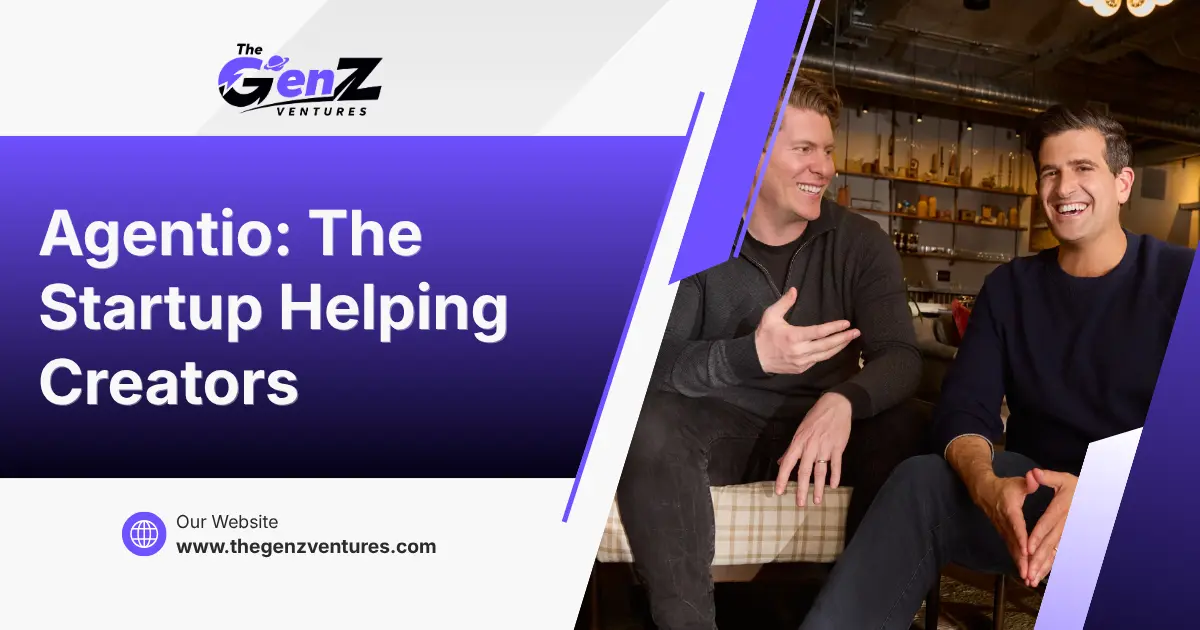
Today, influencer marketing is booming and has all the potential to become fast, data-driven, and highly scalable. With such a rise in digital advertising, Agentio is changing the way how brands and creators work together. Agentio, an AI-powered platform based in New York, helps brands find creators, place bids, and run campaigns in just a few hours.
Founded by Arthur Leopold, former President of Cameo, and Jonathan Meyers (former Spotify engineer), Agentio aims towards making brand collaboration quicker and easier. Earlier, brands took weeks and months to negotiate with creators. However, this is not the case with Agentio. It helps creators receive multiple offers from top brands within hours. Thus, brands can quickly launch campaigns in a short while. This makes digital advertising as simple as running ads on Google or Meta.
Can you briefly introduce yourself and tell us about your business?
I am Arthur Leopold, co-founder and CEO of Agentio. Before launching Agentio, I was working at Cameo. At Cameo, I helped build and scale a platform that connected fans with celebrities with the help of video shoutouts. During my time at Cameo, I found a significant gap in the market. Digital advertising was worth $600 billion, but creator marketing was stuck at $15-20 billion.
So, in 2023, I decided to execute the idea of Agentio with the help of my co-founder, Jonathan Meyers, who had earlier worked at Spotify. We worked for a simple aim: to make creator advertising as easy and scalable as buying digital ads.
Agentio is an AI-powered system that automates a range of tasks. These include discovering creators, matching, pricing, negotiating, approving, and campaign tracking. As of now, reputable brands like DoorDash, Warby Parker, and MasterClass use Agentio to run campaigns quickly and more efficiently.
What inspired you to start Agentio?
We found out that the creator advertising world is too messy. We observed that brands wanted to collaborate with creators, but the entire process of partnership was too slow, manual, and unclear. Everything was executed and communicated through emails, negotiation calls, or long discussions. This was our inspiration, and we worked towards it.
So, we decided to launch Agentio to make the entire process of reaching out to creators completely automated.
We asked a simple question:
What if brands could just “buy” creator content like ads?
This question became the foundation of our venture, Agentio.
What challenges came with building Agentio?
One of the biggest challenges was making people believe that AI could be a potential support in bridging the gap between creators and brands. It was hard for people to understand how the entire collaboration process could be automated. We had to spend a lot of time and effort to make people understand that AI can understand creators and predict performances.
Another challenge was building trust among brands and creators. Brands wanted control, and creators wanted fair pricing. So, we worked hard to design a system that was suitable for both sides.
To solve this issue, we structured a pricing model that allowed creators to recieve 80% of the ad spend, and Agentio takes 20%. This sounds easy and fair, at least better than their YouTube AdSense.
Moreover, we also had to make sure that we provide consistent quality performance. As the number of creators on the platform increased, we ensured that the campaigns performed exceptionally well, leaving everyone satisfied.
How do creators benefit from Agentio?
Creators get the utmost benefit from Agentio. Instead of waiting for opportunities or negotiating endlessly, creators on Agentio receive several bids from some of the most renowned brands within hours.
Some creators even receive 4 to 6 offers for a single content slot. This gives them even more control over pricing and partnerships. In addition, Agentio has witnessed brands spend $500,000 and work with 40+ creators in just 48 hours. This could have taken a long time in traditional workflows.
Apart from this, Agentio focuses on long-term value as well. It not only encourages one-time deals but also believes in building sustainable relationships. Thus, our platform helps creators secure repeat partnerships and multi-month brand collaborations.
Did social media or online communities play a role in your growth? How?
Yes. Social media played a huge role in our initial growth stages. The creator community exists across platforms like YouTube, Instagram, and TikTok and contributed immensely to Agentio’s recognition.
As creators started using Agentio and receiving multiple bids from major brands, word spread quickly within creator communities, management firms, and industry networks. The platform received positive feedback from peers, managers, and agencies. Such an organic use of Agentio helped us build credibility in the market quickly.
Have you faced difficulties from investors, partners, or customers? How did you handle it?
Yes, of course.
Influencer marketing has always been a very manual process, with managers, agencies, and coordinators doing everything. When we started AI-driven matching, automated negotiations, and standardized pricing, some people questioned whether technology could really do those processes well.
Instead of wasting all our time trying to convince people with presentations, we focused on the results. We built a platform that cut the time it takes to get creator partnerships from weeks or months to less than a day.
The results proved it. We’ve seen brands spend hundreds of thousands of dollars through Agentio in just days. That trust is reflected in our funding journey. We’ve closed multiple rounds of investment since launching in 2023, including the support from Benchmark and Forerunner Ventures, firms known for backing category-defining companies. This was the validation of our efforts.
How has being a millennial founder shaped the way you build your company?
As a millennial founder, I’ve become a different thinker when it comes to technology, consumer behavior, and the future of work.
We are the generation that saw the birth of social media, streaming services, mobile technology, and the creator economy. We’ve watched as people have gradually moved their attention away from traditional media and toward individual creators.
As millennials, we also had a special relationship with technology. That’s why we put a lot of emphasis on automation, data, and user experience. Rather than having brands and creators go back and forth in long email discussions and negotiations, we created a system to make collaboration quick and easy.
What achievements stand out the most?
One of our biggest milestones is how fast brands are scaling on the platform. We saw brands grow and spend 2.35x quarter over quarter, showing great repeat usage and trust. Moreover, we also work with big brands like:
- Door Dash
- Warby Parker
- MasterClass
- Bombas
- Mint Mobile
Another big win is that creators will be guaranteed to get multiple bids on their content within hours, something that was almost impossible in the traditional system. We also accomplished significant growth in a short time and got great investment support, including from top venture firms like Benchmark and Forerunner Ventures.
What excites you about the future of the creator economy?
One of our biggest milestones is how fast brands are scaling on the platform. Today, creators are responsible for nearly half of consumer attention, but they only receive a small percentage of ad spend. However, we think this will change.
Creator marketing will be a major component of performance advertising going forward. It’s not going to be separate from digital ads; it’s going to be the same system. We also see AI making this ecosystem more efficient, where each brand can build a diversified portfolio of creators across different audience tiers.
What advice would you give to future founders?
My best piece of advice is simple: fix real-world inefficiencies. Build something to fix real problems. We could see the problem: creator marketing was slow, fragmented, and inefficient. So, we delivered a product that bridged this gap.
I also believe that founders should launch early, learn from actual users, and iterate fast. Perfection is the enemy of progress. One of the most important things is to build something people need and use every day.
Copyright Disclaimer
The views and opinions expressed in this article are solely those of the author and are based on independent research and analysis. The content published on The GenZ Ventures is protected under applicable copyright laws. Any unauthorized copying, reproduction, distribution, or republication of this material, in whole or in part, without prior written permission from the original author or website owner, may result in legal action under the applicable laws of the land.