
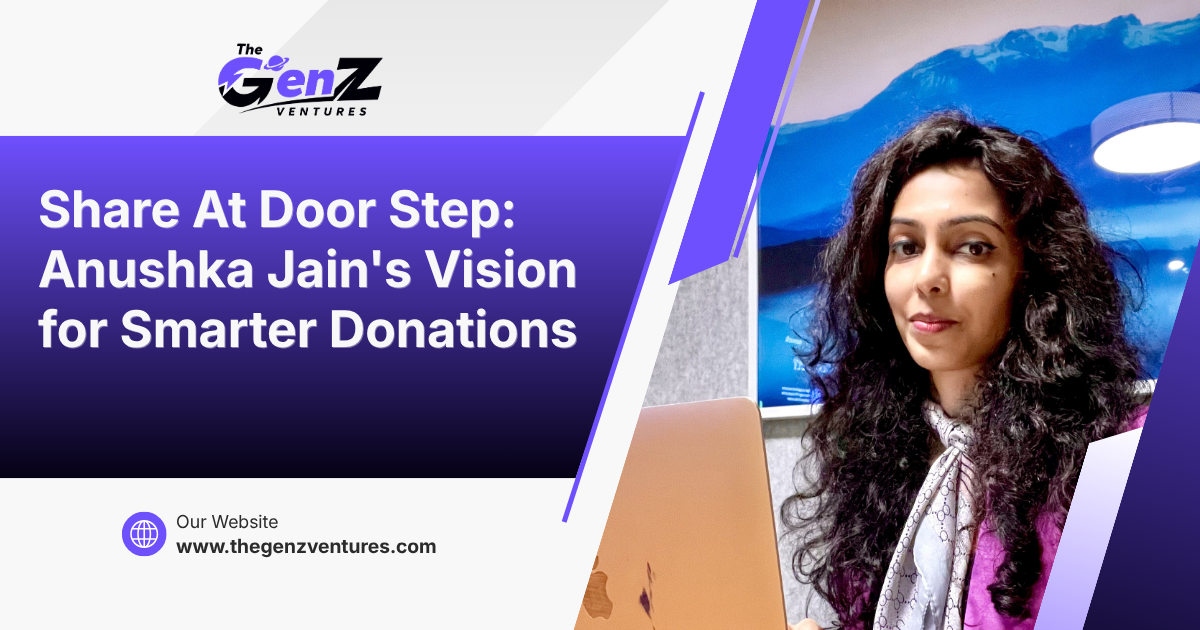
Anushka Jain, a modern-day millennial startup owner, is proving that simple ideas can make a huge impact when they have the capability to solve real problems. As the founder of Share At Door Step, she has made it simple for residents to donate old items easily and conveniently. It started as a small observation in childhood, and now it’s grown as an emerging platform that connects households with verified charities across different countries.
Her journey serves as evidence that curiosity, determination, and courage can transform old ways of doing things. Let’s take a deep dive into her entrepreneurial life and learn some valuable lessons on innovation, resilience, and building a business that provides a balance of convenience with social impact.
Table of Contents
Can you briefly introduce yourself and tell us about your business?
Hi, my name is Anushka Jain. In the entrepreneurial circle, I am also referred to as “Lira”. I founded Share At Door Step, a platform that makes it easy to donate clothes, toys, books, gadgets, and furniture as simple and convenient as ordering food. It allows people to schedule a pickup from their doorstep, while technology matches donated items with trusted organizations.
The idea of Share at Door Step came with a simple realization: donating unused items should not be a complicated process. Today, the platform is catering to more than 3 million households and supports over 300 charities and organizations. Moreover, it also supports 500+ companies through employee engagement and take-back programmes across India, Singapore, and the UK. A pilot programme in the United States is also currently underway.
However, when I am not building anything, you will see me chasing a new idea, a new skill, or a good workout. I am a very curious and optimistic person, which makes me believe that impossible things are just conventions that nobody bothered to explore or question.
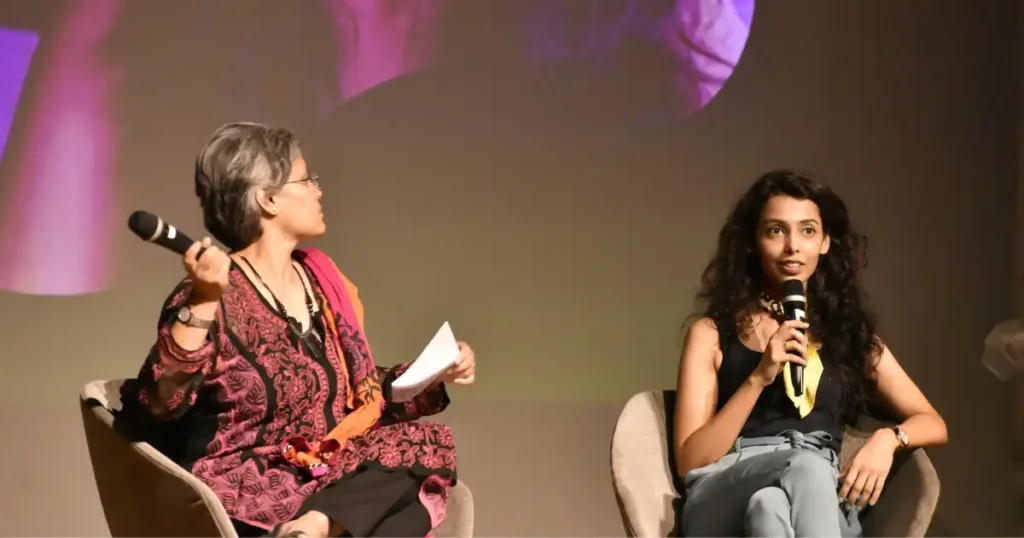
What inspired you to start a business at such a young age?
My only source of inspiration was watching my mom donate clothes exactly once a year on my birthday. I wondered why she did that only once a year. Later, I realized that there were only a few trusted sources for donations. So, I wanted to fill this gap.
I was pursuing computer science in college, and later, when I shifted to Bangalore for my initial job, I took this as a side project. During the early stages, I did 150 pickups by myself. There was no app and no team. I went door to door and made people believe in my service. As a young founder, I had nothing to lose but enough passion to believe that I could fix this gap.
What challenges come with being a young founder that people often overlook?
Being a young founder of Share at Door Step, I got really lucky. I was living in Bangalore, which is one of the leading startup hubs in the country. I was able to connect with reputable founders who were really genuine and approachable. Moreover, I got a chance to be part of entrepreneur communities, which made it easy to meet people who were miles ahead.
However, one of the significant challenges that I faced was closing bigger clients. There is always a pre judgement with bigger clients that a young team might not be able to deliver. So, I had to prove myself a lot more to gain their trust.
What’s one stereotype about young entrepreneurs that you want to break?
While building Share At Door Step, I came across several instances where I realized that people take time to believe in young founders. They think that young and inexperienced individuals don’t know much about businesses, and therefore they need to learn from case studies and templates.
However, I oppose this thought. When someone does not know how it’s supposed to be done, they might discover ways that no one else has tried before. I really like Sara Blakely, the founder of Spanx. She always talks about the value of not knowing everything. Also, when you are too experienced, you talk to yourself with logic, but as a young founder, you are always far more biased for action.
What was your biggest fear when you launched your idea publicly?
As per common perception, people would assume that my biggest fear would be failure. However, that is not the case. Being a part of the startup ecosystem, I have understood that failure is very natural. What I feared most was not reaching my full potential or giving up on the idea before it had a chance to succeed. Moreover, I feared that I would change my path based on short-term obstacles.
I just wanted to make sure that every business idea receved its time, effort, and commitment that it genuinely deserved before deciding its future.
Did social media or online communities play a role in your growth? How?
Yes. Social media has played a huge role in our overall business success. During the early stages of our business, we spent very little on paid acquisition; it was entirely word of mouth and social media. Moreover, we received a lot of organic feedback in Reddit threads and Facebook groups. Also, influencer shoutouts were a game-changer for us. So, I believe that we cannot ignore the power of social media in the current age.
What does success mean to you at this stage of your life?
Success for me is all about freedom. It is freedom to choose my own path, make my own decisions, and build something that reflects my values and beliefs. People often assume that success is only related to achieving milestones. In my case, success is also something where I can create a healthier life for myself. According to me, taking care of yourself is just as important as completing an endless list of tasks and responsibilities. So, for me, real success is having the freedom to grow, learn, and live life on my own terms.
Have you faced age bias from investors, partners, or customers? How did you handle it?
During the early years of building Share At Door Step, I faced a lot of bias from investors. Being a young woman made it even tougher. There were several moments that made others believe that someone else was the actual founder and I was their assistant or a part of the support team.
Instead of trying to convince people with words, I decided to let my work speak for itself. I made sure that I was always well-prepared, understood my business numbers clearly, and delivered everything that I promised. Over time, people started focusing less on my age and more on the value that I brought to the table.
How do you hire or work with people from older or younger generations?
More than experience and expertise, I focus on hiring people who have hunger and honesty within them. My team is small and has people working of almost all ages. Older employees bring operational discipline and patience to the table while younger ones bring speed and fresh perspectives. Gen Z in the modern startup ecosystem is working with great enthusiasm and smartness at the same time.
However, my work is to understand how each person works best, learn their style, speed, and offerings, and then evolve our processes around that, rather than forcing everyone into one mould.
What’s one small win that meant a lot to you in the beginning?
For me, it was the energy shift – the difference between being the person who wants to start something and the person who has actually taken the first step. Once I’d taken it, I felt so energised that even a hectic, drama-filled day felt like exactly what I’d hoped for, because it meant the journey of discovering my full potential had begun. The visible milestones – first client, first customer, first NGO partnership – were all lovely markers along the way. But what really made me feel successful wasn’t any of them; it was simply knowing that something had shifted inside me.
What motivates you on days when things aren’t going as planned?
I do not really depend on motivation to keep going. For me, this way of life has simply become natural. Entrepreneurship is full of unexpected situations, and things rarely go exactly as planned. Out of many tasks and decisions, there will always be something that does not work the way you expected, and that is completely normal.
Over time, I learned to accept uncertainty as a regular part of the journey instead of seeing it as a problem. Rather than getting stressed or discouraged, I try to focus on finding the next solution and moving forward. In many ways, it is like using Google Maps. If one route is blocked, it automatically finds another way without creating panic. I believe entrepreneurs also need to develop the same mindset and adjust according to changing situations.
What excites you the most about the future of your industry?
One of the most exciting things is that sustainability is no longer seen as a responsibility or an additional cost for businesses. Earlier, businesses used to think that their profits would be affected if they did good for the environment. However, this approach is changing.
Now, more and more brands are making sustainable choices, the government is introducing new regulations, and businesses are realizing that circular models can build significant customer loyalty and sustainable growth.
I like to think about the problem of waste in two parts. Imagine a tap running into a basin. The tap represents the constant flow of new products being made and sold. The basin represents our homes, cities, and eventually our landfills. If the tap keeps running and nothing is done, the basin will overflow.
To solve this problem, we need to do two things: manage the overflow and also control the tap.
At Share At Door Step, we work on the overflow. We help bring unused clothes, toys, and household items back into use through reuse, donation, and redistribution. Instead of letting these items go to waste, we give them a second life and create value for communities.
But that is only one side of the solution. If brands continue to overproduce or design products without thinking about their full lifecycle, waste will keep growing. That is why we are launching Beyond Buy. Through it, we help brands understand what happens after a customer makes a purchase, how long products are used, when they are passed on, and why people let them go. These insights can help companies design better products, match supply with real demand, and create items that last longer.
How do you see your generation changing the broader startup ecosystem in the next 5-10 years?
I believe that in the future, businesses will no longer see profit and purpose as two opposite goals. Companies are now understanding that doing something for society and building a successful business can go hand in hand.
According to me, Gen Z founders will not treat social impact as a different activity or a CSR initiative. Instead, impact will become a part of the key business model itself. Moreover, I also believe that many companies will be bootstrapped and will create entirely new categories instead of just following traditional business formats. This will bring a positive change as it encourages innovation and gives entrepreneurs the freedom to build in ways that truly reflect their vision.
Moreover, technology is playing a crucial role in turning ideas into reality. This gap is helping aspiring individuals build something more meaningful. As a result, entrepreneurs are following a whole new path to success.
What advice would you give to new entrepreneurs for building a successful business?
I would like to give three pieces of advice to future entrepreneurs:
- It is important to believe in yourself from the beginning and never underestimate yourself.
- No idea is a bad idea. Many successful businesses today started with one concept and evolved into something much bigger through learning and adapting along the way.
- The path to success automatically shows up as you walk. You don’t need to have figured it out before you even begin. So, do not wait for the blueprint; just figure out the step and get going forward.
People can reach us on our official website and linkedIn page
Instagram: https://www.instagram.com/shareatdoorstep/ (Global)
https://www.instagram.com/sadsindia/ (India)
Facebook: https://www.facebook.com/sadsindia
Website: UK: https://shareatdoorstep.co.uk/
Singapore: https://sg.shareatdoorstep.com/
India: https://shareatdoorstep.com/
Linkedin
Company: https://www.linkedin.com/company/share-at-door-step/
Founder: https://www.linkedin.com/in/anushka-jain-sustainability/
Twitter: https://x.com/shareatdoorstep (Global)
https://x.com/SadsIndia
Also Read: INDR Finance: Inside the Vision to Connect India’s Digital Rupee to Global Markets