
Table of Contents
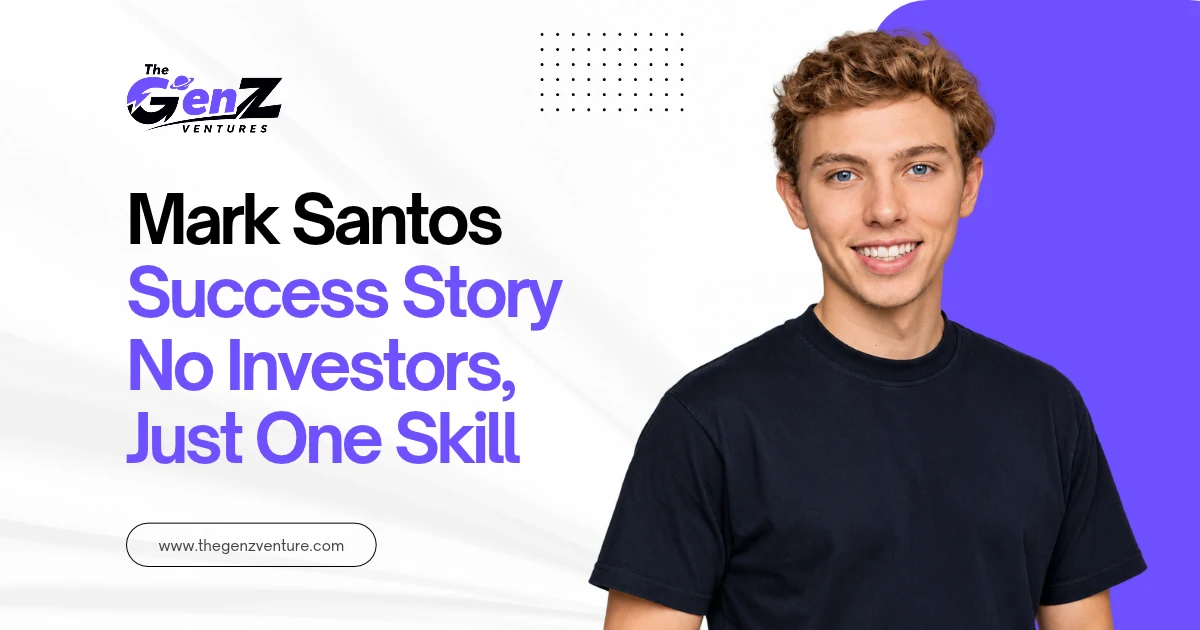
Story Of Mark Santos
Can you briefly introduce yourself and tell us about your business?
I’m Mark Santos, founder of Mark Studios, a video editing studio in Palm Beach County, Florida. I grew up in São Paulo, Brazil, and started editing videos when I was 10 for my own YouTube channel. At first, I ran my channel in Portuguese. I moved to the US at 15, and in 2020, while I was a student at the University of South Florida, I started selling my editing on Fiverr.
That grew into Mark Studios, which I founded in 2021. The studio has completed 8,000+ orders for 4,500+ clients and is Top Rated on Fiverr with a 4.9 rating, and in February 2025 I rang the New York Stock Exchange opening bell with Fiverr. Today, we help creators and businesses with their video content through our monthly plans for long-form YouTube edits, Shorts, thumbnails, and titles. Before we start our work, we agree on and share a clear price.
What inspired you to start a business at such a young age?
I didn’t set out to start a business. I’d been editing for my own channel since I was 10, so it was already the thing I knew best. In 2020, I was in college and wanted to see whether people would pay for it, so I put my editing on Fiverr. They did, and the orders kept coming. So in 2021, I turned it into a real company. What really drove me was freedom. I wanted to own my time and build something of my own, instead of depending on one job or one boss for the rest of my life.
What challenges come with being a young founder that people often overlook?
When you start, you have to learn how to run a business by actually doing it and working with real clients. No one teaches you how much to charge, how to plan a project, or when to say no. You just figure it out with every new order while clients are waiting for their videos.
That’s a big part of why every Mark Studios project now starts with a clear, written agreement on the exact work and pricing. The other thing people overlook is that at the start you have to handle everything yourself: the work, the client messages, deadlines, and paperwork. So, a major skill for success is learning what tasks only you can handle and setting up smart systems for the rest.
What’s one stereotype about young entrepreneurs that you want to break?
That you need investors to build something real. I built Mark Studios one order at a time, with no outside money, and I still own 100% of it. A lot of young founders think the first step is a pitch deck. For me, the first step was doing work people were willing to pay for, and doing it well enough that they came back and told others.
What was your biggest fear when you launched your idea publicly?
When I started on Fiverr, I was honestly worried about getting a bad review. I knew that on a marketplace like this, your first few reviews build your entire reputation, and just one bad one can ruin it. Because of this, every early order felt like it could make or break my profile. That fear and experience helped me learn good habits. I make sure to reply quickly, deliver on time, and give clients what we agreed on. My focus on these things is still the same, and they have helped Mark Studios maintain a 99% on-time delivery rate.
Did social media or online communities play a role in your growth? How?
Yes, from the very beginning. I learned how to edit videos directly on YouTube. I grew my personal channel to more than 200,000 subscribers and 10 million views, which earned me YouTube’s Silver Play Button. That experience taught me exactly how to keep viewers engaged. Later, I found my first clients on Fiverr, and their positive reviews brought the next ones. Today, my company, Mark Studios, tries to give back to the creator community too by offering free tools like a caption checker and a loudness meter. We also publish original research, such as how fast captions really run in online videos.
What does success mean to you at this stage of your life?
For me, success means freedom. I mean having complete control over my time and building a lasting business that can survive and grow all on its own. I want to create something independent that doesn’t rely on any single person or platform to succeed. It also means I want to give my family a life where they never have to worry. I’m less interested in looking successful to others. I want to build something that we truly own and gives us more choices in life.
Have you faced age bias from investors, partners, or customers? How did you handle it?
Not much, honestly. Online, clients judge the work, the reviews, and how fast you reply. Nobody sees your age. When I started on Fiverr as a college student, clients only looked at my portfolio and reviews. The same thing happens when I work with experienced business owners. If you deliver your work on time and do what you have promised, people stop caring about your age very quickly.
How do you hire or work with people from older or younger generations?
I work with all kinds of clients, from young creators to business owners who have been running their companies for years. For all of them, I make sure we agree on the price and what is included before we start; I reply as quickly as I can and deliver my work on time. The only thing that really changes is how people like to communicate. Some clients prefer a short message, while others want more details and regular updates. I try to understand what works for each client and change my style rather than expecting them to adapt to me.
How has being a Gen Z founder shaped the way you build your company?
Since I started making videos at a younger age, I’ve always understood how things work online. I build everything to work how internet users want. That means fast replies, prices you can see before you buy, and as much as possible done self-serve. On our site, you can get an instant quote without booking a sales call. I’ve also been on the creator side my whole life, so I think about video the way a viewer does: what makes someone keep watching, click a thumbnail, or skip.
What’s one small win that meant a lot to you in the beginning?
My very first Fiverr order. Someone I’d never met paid me for something I had been doing for fun since I was 10. It was a small order, but it proved that my editing had real value to other people, and that was the moment the idea of a business stopped being hypothetical.
What motivates you on days when things aren’t going as planned?
My family, first. And on a practical level, the client whose video needs to go out. Someone is counting on that edit for their channel or their business, so the work gets done even on a bad day. Remembering how far this has come from that first order helps too.
What excites you the most about the future of your industry?
Every business is becoming a media company. A few years ago, video was something a brand made a few times a year. Now a local plumber, a law firm, and a church all need YouTube videos, Shorts, and Reels every week. That means more people need good videos than ever, and most of them don’t have the time or the skills to edit them themselves. That’s a huge opportunity for editors and studios who can deliver great work consistently.
How do you see your generation changing the broader startup ecosystem in the next 5-10 years?
I think we’ll see a lot more bootstrapped, internet-first companies that never need investors. The tools and platforms are there for one founder to start with a single skill and grow it into a real business. You’ll also see more founders who started as creators building companies around what they learned online, and very small companies doing work that used to take a big agency.
What advice would you give to new entrepreneurs for building a successful business?
If you want to start a business, start with something you already know how to do. I didn’t start with a big business plan. I just focused on a skill I’d been working on since I was 10 and started getting one order at a time. As more clients came in, I learned how important it was to reply quickly, do what you said you’d do, and agree on the price and work before starting. Good reviews and referrals take time, but they make a real difference. Every client you treat well brings the next one.
Also Read: The Story Behind Synaptix: Samuele D’Esposito’s Entrepreneurial Journey