
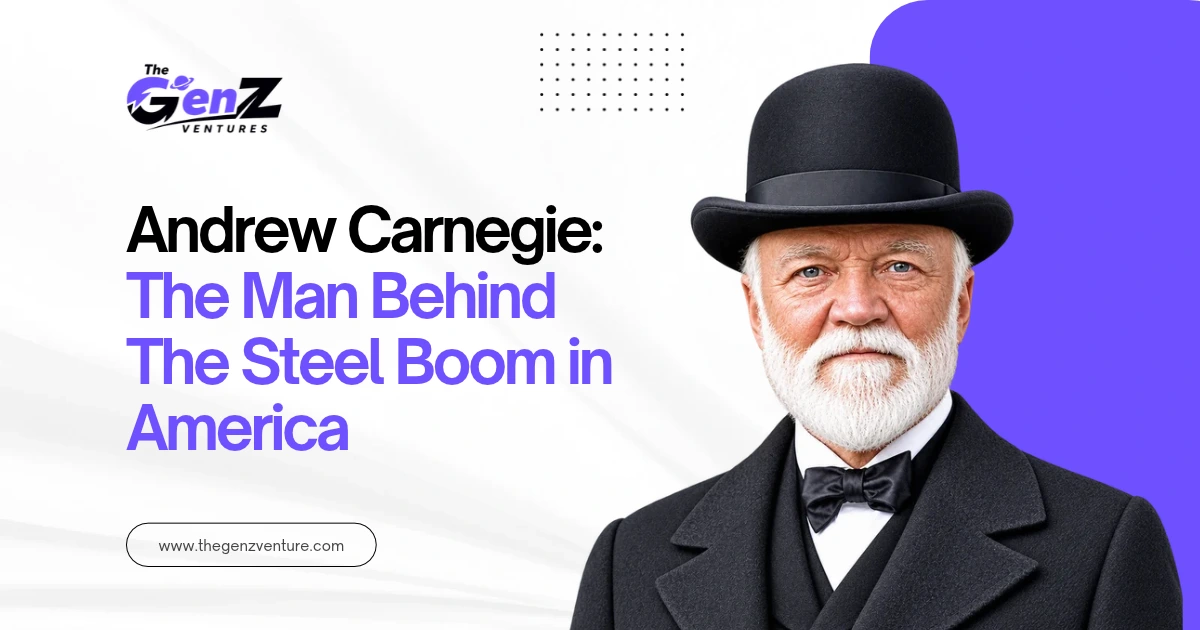
Andrew Carnegie (1835 to 1919) was a successful Scottish-American businessman who changed the American steel industry during the late 19th century. He was one of the richest people in the world. Later, he gave away 90% of his wealth to support education, libraries, and other public causes.
Andrew Carnegie was one of the most successful businessmen in American history. He came to America as a poor immigrant from Scotland, but his hard work and smart choices made him a powerful leader behind the steel boom in America. He built a massive steel business that helped build modern bridges, railroads, skyscrapers, and other structures in the country. He was not just a great businessman but also a very generous person. He gave most of his wealth to help millions of people. Read on to learn Carnegie’s amazing story.
Table of Contents
Andrew Carnegie Quick Facts
- Full name: Andrew Carnegie
- Born: November 25, 1835 (Dunfermline, Fife, Scotland)
- Died: August 11, 1919 (Lenox, Massachusetts, USA)
- Company: Carnegie Steel Company (later sold to form U.S. Steel)
- Famous for: Leading the American steel boom and donating 90% of his wealth to libraries, universities, and world peace.
- Wife: Louise Whitfield (married in 1887)
- Child: Margaret Carnegie Miller
- Parents: William Carnegie and Margaret Morrison Carnegie
From Scotland to America: Early Life of Carnegie
Andrew Carnegie was born into a poor weaver’s family in Dunfermline, Scotland. In 1848, his family immigrated to Allegheny, Pennsylvania, to escape extreme poverty.
- Born in Scotland: Andrew started his life in a small town in Scotland. His family was very poor. When his father’s weaving business failed, they decided to move to America for a better life.
- Moving to America: His family borrowed money to leave Scotland in 1848. They immigrated to Allegheny, Pennsylvania, to look for new jobs.
- Poor Living Conditions: The Carnegies faced a foreign world with no money. Everyone had to work immediately to make enough money for food and rent in their new home. But Andrew’s consistent hard work completely changed his family’s future.
Starting Work at 13: His First Step Towards Success
When Andrew Carnegie was just 13, his family moved to America to find a better life. To help his parents earn money, he started working right away.
- The Factory Bobbin Boy: Andrew’s first job was in a dark textile factory. He worked as a bobbin boy in a Pittsburgh cotton mill. He worked for 12 hours every day to earn just $1.20 per week for his family.
- Boiler Room Assistant: After that, he took a tougher job in a factory basement. His new task was to fire up the large steam boilers. His new job was scary, but it helped him learn how to be brave and responsible under pressure.
- The Telegram Messenger: At 14, he became a messenger boy for the Ohio Telegraph Company. This job helped him meet local business leaders and learn how the city worked. He taught himself how to read Morse code by just listening to the machine’s clicks.
- Personal Telegraph Operator: His rare skill and sharp mind caught the attention of Thomas A. Scott, an executive at the Pennsylvania Railroad. He hired Carnegie as his personal telegraph operator and secretary.
From the Pennsylvania Railroad to the Steel Industry
Andrew Carnegie’s time at the Pennsylvania Railroad helped him learn how businesses operate.
- Learning the Business: He started working as a personal assistant at the railroad company. This job taught him corporate management, smart investing, and cost control and connected him with powerful business leaders.
- Smart Early Investments: His boss introduced him to the stock market. He began buying shares in sleeping cars, iron bridges, and oil fields. These smart choices helped him secure the cash he needed for investing.
- The Shift to Iron: By the late 1860s, he realized that steel would replace iron to build America’s expanding railroads, bridges, and growing cities. This inspired him to leave his job and focus entirely on steel production.
Building Carnegie Steel into an Industrial Powerhouse
Carnegie transformed the steel industry by adopting the Bessemer process. He took control of every part of the steel process to lower his costs and lead his competitors.
- Using the Best Technology: Carnegie brought the famous Bessemer process to America, which allowed for cheap and quick production of high-quality steel. He established the Edgar Thomson Steel Works and grew his business through vertical integration.
- Controlling the Whole Chain: He bought the coal mines, iron ore fields, and railroads used for his business. Instead of relying on third-party vendors, he bought every single step of the supply chain. So, he never had to pay other companies for supplies and kept all the profits for himself.
- Cutting Down All Costs: His smart strategy allowed him to lower production costs. He dropped prices so low that no other steel company would compete with him, making Carnegie Steel Company the most profitable industrial corporation of that time.
The Homestead Strike: A Controversial Chapter in His Career
In 1892, the Homestead Strike was a major fight between Andrew Carnegie’s steel company and his workers. It badly damaged his reputation as a boss who cared about people.
- His partner, Henry Frick, wanted to cut the workers’ pay. The workers refused to accept less money and decided to protest and block the steel plant.
- Frick hired armed Pinkertons to take control of the factory. A big clash started between the two groups, lasted for many days, and even became deadly.
- Some workers and private guards died during that. Many others were badly hurt. The guards finally gave up, and then Pennsylvania’s governor sent thousands of soldiers to stop the fighting.
- The soldiers took over the town and protected the factory, which helped the company bring in new workers and break the strike completely.
- Carnegie didn’t directly order the violence. He was away in Scotland during the strike, but the public was very angry about the violence. This badly damaged his image as a friendly benefactor.
Selling Carnegie Steel: A Billion-Dollar Business Deal
In 1901, Andrew Carnegie made history by selling his massive steel company to the legendary financier J.P. Morgan.
- The Massive Selling Price: Andrew Carnegie sold his company for an incredible $480 million. In today’s money, that amount is worth billions of dollars, making it one of the largest business deals ever.
- Creating a New Giant: J.P. Morgan accepted his price immediately. He bought the company to combine it with other smaller businesses to create U.S. Steel. That company became the very first multi-billion-dollar company in the entire world.
- Becoming the Richest Man: This historic deal instantly changed Carnegie’s life, as he became the richest man in the world. After making this deal, he decided to retire from the business world and spent the rest of his life giving away his wealth to build public libraries, schools, and other noble causes.
Beyond Business: Carnegie’s Journey into Philanthropy
Andrew Carnegie believed that rich people should use their money to help others. After selling his steel company, he gave away most of his wealth to many noble causes.
- He gave away more than 350 million dollars during his lifetime. He believed that rich people shouldn’t keep all their money but use it to help communities grow and succeed.
- He spent millions of dollars to build more than 2,500 public libraries around the world. He wanted everyone, especially poor people, to have free access to education and a chance to learn.
- He founded Carnegie Mellon University, built the famous Carnegie Hall in New York, and established institutions dedicated to scientific research and world peace.
Andrew Carnegie: Final Years and Death
Carnegie spent his final years in his grand estate in New York City and Skibo Castle in Scotland. He remained deeply invested in global peace efforts. The outbreak of World War I deeply devastated him. On August 11, 1919, he died from bronchial pneumonia at his Shadowbrook estate in Lenox, Massachusetts. By the time of his death, he had donated around 90% of his total wealth to help others.
Business Lessons to Learn from Andrew Carnegie’s Journey
From a poor immigrant worker to the world’s richest man, Andrew Carnegie’s journey offers valuable lessons for building a successful business. His journey shows that great business leaders don’t just work hard but know how to think ahead and manage both money and people.
- Embrace New Technology Early: He always looked for better ways for steel production. By adopting the Bessemer process before his competitors, he produced high-quality steel much faster and cheaper. This allowed him to dominate the American market.
- Take Control of Your Supply Chain: He did not want to rely on other businesses. He bought the coal mines, iron fields, and railroads that his factories needed to operate. This ensured his steel production never stopped and kept his operational costs very low.
- Surround Yourself with Talent: He openly admitted that he did not know everything about steel. Instead, he hired brilliant managers, engineers, and workers who knew exactly how to run his massive factories and solve complex business problems.
- Make Cost Control a Priority: While other business owners focused on their total profits, Carnegie tracked every small expense. By keeping his production costs as low as possible, he protected his business from market changes.
Conclusion: The Businessman Who Left a Lasting Legacy
Andrew Carnegie left an unmatched legacy. He started with nothing as a poor immigrant boy but completely transformed the American steel industry through his smart choices. His life shows us that anyone can achieve their dreams if they work hard.
Even after becoming successful, he always looked for ways to grow and improve. His final years proved that he cared more about people than profits. He used his billions to build libraries and schools to help others learn. He is not just remembered as a powerful business leader but also as a generous man who believed the best way to be rich is to give back to society.
Read more stories like Carnegie’s that inspire the next generation of entrepreneurs to think big and create their own success stories on The Gen Z Ventures.
Also Read : Henry Ford: Founder of Ford Motor Company