
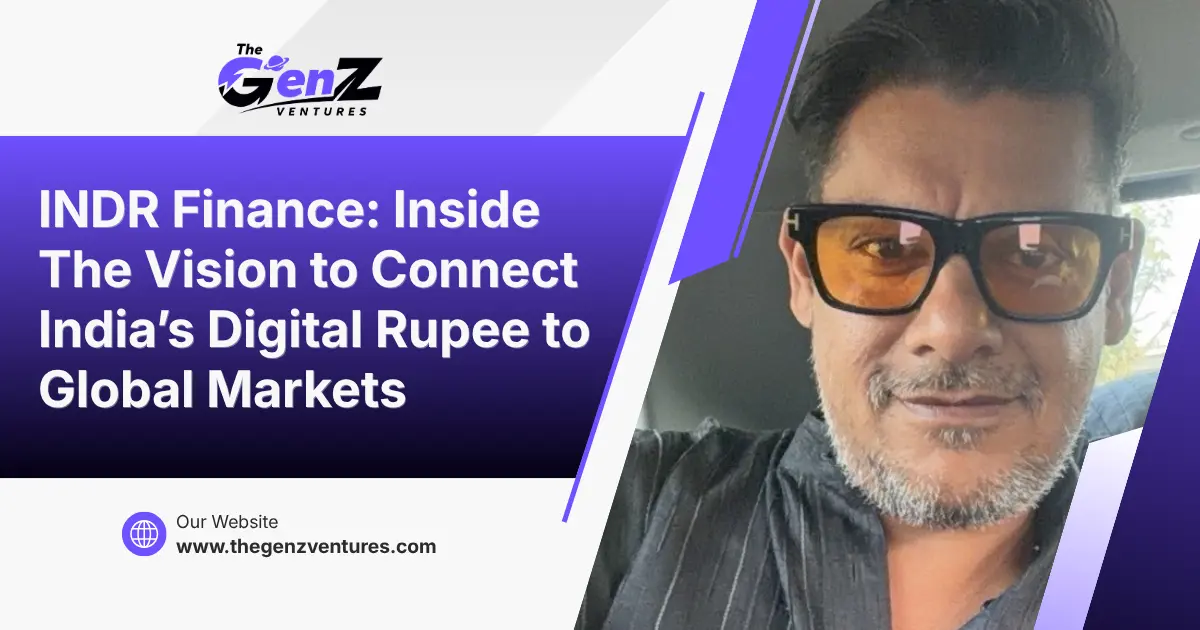
A new wave of young founders is changing the way money, technology, and ideas connect across the globe. INDR Finance is one such example that bridges the gap between India’s digital rupee and global blockchain networks. This specific story is about Tridib Nandy, the co-founder of INDR Finance. His journey spans across various fields like aviation, finance, music, and medicine.
INDR Finance is a significant bridge that connects India’s Digital Rupee with global blockchain systems, so that digital money can move easily across the world. This story serves as proof of how a young founder thinks differently about money, technology, and life. It also depicts the founder’s belief in how industries are connected and that the future of finance will be even quicker, simpler, and open for everyone.
Table of Contents
Can you briefly introduce yourself and tell us about your business?
Hi, my name is Tridib Nandy, and I am the co-founder of INDR Finance. At INDR Finance, we are creating a technology that easily links India’s Digital Rupee with global blockchain networks, bridging India’s CBDC with global blockchain liquidity. This means that we are allowing digital money to move more easily and securely between traditional finance and the growing blockchain ecosystem. Moreover, INDR Finance works in the area of stablecoin infrastructure for India, including KYC-enabled eRupee and crypto remittance systems.
However, I don’t want to be recognized for just a single company.
Over the years, I have built businesses and worked across various sectors, including aviation, finance, music, and medicine. I have also served in Theseus Capital as a Strategic Partner. To many people, these sectors seem poles apart, but I have always considered them connected. For me, everything is about learning, building, and providing meaningful solutions to real-world problems.
What inspired you to start a business at such a young age?
Starting to build something at a very young age was definitely not on my to-do list. It came naturally from a desire to build, learn, and create something meaningful. Also, I don’t have the patience to take long routes to accomplish a goal. I grew up in a middle-class Bengali family in Delhi, but I always had the desire to make something big. I feel that many people spend years chasing paths that they do not even have an interest in.
So, instead of becoming a follower, I did what excited me the most and made me feel alive. In my twenties, I was already operating a helicopter and private jet business. Under this, I trained India’s first 100 helicopter pilots. Well, most people my age were still figuring out their careers at that point. Therefore, I took a shortcut and started something that made me happy and satisfied. This was the only source of inspiration and motivation for me.
What challenges come with being a young founder that people often overlook?
When you build something as a young individual, people’s primary concern is fundraising and money. However, very few people talk about loneliness. When you have an idea that you are working on day and night, others don’t understand it. Thus, it feels like you are the only person who believes in it. Sometimes, I even encountered self-doubt about what if it does not work out, until the day when people finally see what I saw.
Another challenge is that people often want everyone to fit in a certain box. While I was building INDR Finance, people consistently told me to be more realistic and to take a safe path. However, remaining confident while still hearing different perspectives every day was one of the hardest parts of building something so early.
What’s one stereotype about young entrepreneurs that you want to break?
One stereotype I would love to break is the idea that Gen Z or Millennial founders are reckless and are not serious enough. This is not true, as I have personally met young founders who understand business, people, and money better than individuals who are three times older than they are. I don’t believe that the youth lack wisdom; it often means having fewer fears and fewer limits in their minds.
Therefore, such fearlessness allows people to give a try to new ideas and build things that did not exist before. So, as per my belief, you do not need someone to give you permission; if you have a strong belief in something, you can start building today with conviction.
What was your biggest fear when you launched your idea publicly?
I don’t fear failure. I have failed several times in my life, and some of the most crucial lessons came from those experiences. The hardest part was being misunderstood. I have always believed that life is both spiritual and practical at the same time. But people will often want to position you in a single category.
So, when I put my business out there for the public, I knew that people would see all sides of it, the skies and the roots. Over the years, I have learnt to accept it with dignity. In fact, I believe the more genuine and authentic you are, the more people connect with your story. Being yourself is far more powerful than trying to fit into someone else’s idea of success.
Did social media or online communities play a role in your growth? How?
Yes, 100%. Digital transformation has changed everything. Today, someone sitting in Africa, India, Europe, or anywhere else in the world can learn from the same conversation. Moreover, online communities have played a key role in my overall business joruney. These communities have become the best place from which I can learn and share my own experiences.
Recently, I have been focusing more on speaking publicly and sharing lessons that I used to keep private for years. Now, the internet is the modern university where people learn from each other every day. I am also just a student who shares what I have learned while continuing to learn from other prominent figures.
What does success mean to you at this stage of your life?
During the early stages of my life, success meant getting access to rooms and opportunities. Today, success means being able to enter those rooms, provide value, and leave without needing any validation from anyone. Therefore, success for me is making an impact and a positive influence.
If I share something valuable that inspires even one young person to believe in themselves and follow their desired path, that is a meaningful win for me. I am very much focused on building a legacy for my name. Thus, I want to help people find what is possible for their own lives and future betterment.
Have you faced age bias from investors, partners, or customers? How did you handle it?
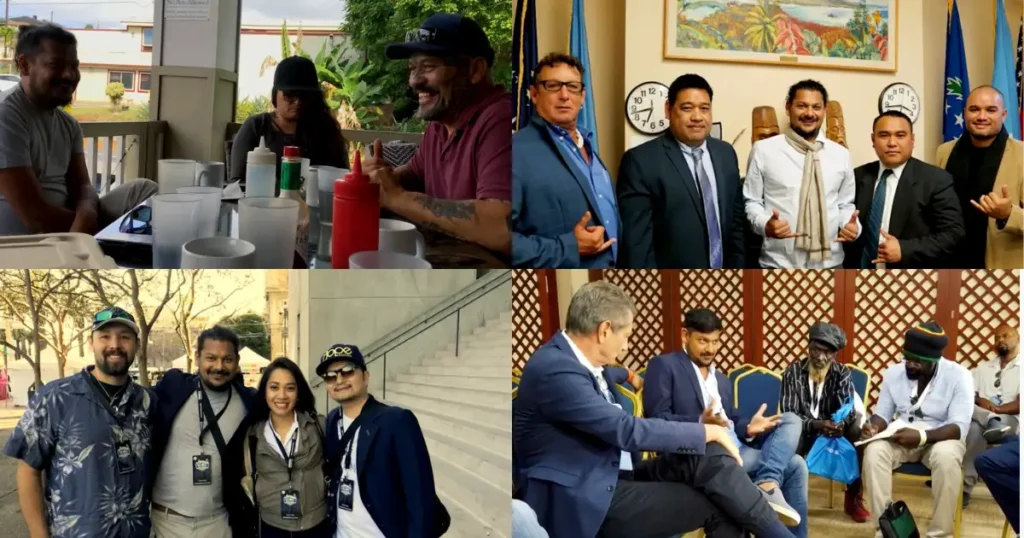
Yes, building success stories of Millennial founders is not easy. When you are young, people often assume that you have not earned a seat at the table yet. Instead of arguing with that, my approach has always been to let my work speak for itself. It becomes harder for them to ignore outcomes like training India’s first 100 helicopter pilots or being involved with Bitcoin in early 2010.
The true shift happens when you do not need any validation from others. Once confidence in the value of the work is clear, the bias stops being the problem for the founder and becomes a limitation in how others choose to see things.
How do you hire or work with people from older or younger generations?
I have worked across aviation, finance, music, and medicine, and one of the key things I have learnt is to never think in terms of generations. I focus more on mindset, energy, and values. I have worked with teenagers as well as people with decades of experience, and I have gained value from both groups.
Younger people usually have fresh ideas, perspectives, creativity, and courage, and on the other hand, older professionals have more wisdom, experience, and patience. What stands out for me is whether someone is willing to learn and genuinely cares about the work they are doing. Age is just a number; attitude is what makes people shape their identity in the market.
How has being a Gen Z/Millennial founder shaped the way you build your company?
Being a part of an ecosystem where Gen Z and Millennial founders are getting the recognition they deserve has taught me not to put limits on ideas. While I was growing up, I was told that finance belongs in one place, creativity somewhere else, and spirituality belongs somewhere else completely.
I never gave importance to these divisions. I have always believed that different fields are connected in ways most people don’t see. However, building early and young has taught me to move quickly, stay curious, and keep learning. I don’t like fixed rules or fixed ways of thinking. I see companies as living experiments that continuously evolve and improve.
What’s one small win that meant a lot to you in the beginning?
One of the early small wins that made me even more confident was when I mentored somebody, who told me that I had changed the way they see their future. For me, revenue and business milestones are important, but that very moment showed me something even more bigger.
It reminded me that sometimes the best value you create is helping another person and motivating them to believe in themselves when everyone doubts them with their respective opinions. So, the time someone I inspired took a step forward in their lives, it felt like a win worth celebrating.
What motivates you on days when things aren’t going as planned?
My key source of motivation is the mission, along with the memory of being broke, doubtful, and completely counted out, and still managing to stand back up. On tough days, there is a reminder that life always has two sides, negative and positive. There is no light without darkness, and no real growth without going through breakdowns and change. Bad days are seen as moments that test how much the goal really matters to you. Along with that, faith in Baba has always been constant in my journey. He gives me strength and a feeling of support through my highs and lows, making quitting not an option.
What excites you the most about the future of your industry?
What makes me more excited is how quickly money and financial systems are transforming. We are heading toward a future where transactions can happen almost instantly, across borders, and with much greater efficiency.
With INDR Finance, we are helping to build a technology that easily connects India’s Digital Rupee to global blockchain networks. According to me, the next 10 years of finance will bring opportunities that were impossible just a few years ago. The people shaping the future may not always come from traditional institutions. Many of them will be builders who saw the opportunity early and made a decision to act on it.
How do you see your generation changing the broader startup ecosystem in the next 5–10 years?
According to me, Gen Z startup stories and even Millennials will focus on bringing together the idea of profit, purpose, and personal values in a much stronger way. They will not feel the need to distinguish business from meaning. They will build meaningful businesses that they truly care about and leverage technology to make an impact on a global scale.
So, I have a strong belief that future founders will be more independent, more creative, and less reliant on traditional gatekeepers. They will make businesses that are driven not just by revenue but also by values.
What advice would you give to new entrepreneurs for building a successful business?
My biggest advice would be to never stop being a student. The moment you think that you have learned everything is the moment you stop growing. Do not be afraid to follow a path that feels right for you, even if its seem different or inadequate from others’ perspective. Even if you fail, you will learn. Failures are the best teachers you will ever meet. So, stay curious and keep learning without allowing others to place restrictions on what you can become.
Another important thing is to build with heart. The businesses that make an influence are often created by people who genuinely care about the people they serve. Success is even more meaningful when you lift others to grow along the way.
Also Read: Ankur Goyal: The Founder Building Braintrust, The Observability Layer for AI